DISCLAIMER

DISCLAIMER: The content of this blog reflects neither the opinions or views of the parties involved in its creation and/or distribution.

Friday, October 19, 2018

Noise-Canceling Devices

Background History


Trains, cars, and airplanes: how great they are for transportation, and how bad they are for a quality listening experience. Whether its some older music or the newest podcasts, earbuds and headphones are used by the masses. The problem occurs when outside noises interfere with the audio, creating a poor user experience. That's where noise canceling devices come into play. They use innovative technology to limit outside noises and focus on the desired audio.


How it Works


A small microphone is placed on the outside of the headphone or earbud, which listening to the external sound. Noise-canceling circuitry then creates a replica of the wave and sents it out of the headphones, limiting the majority of the noise. Sometimes the circuitry can catch parts of audio being transmitted inside the headphones, which can take away from the user experience.


Impacts/Future Outlook


As headphones continue to grow in popularity, so does the market of noise-canceling devices. Consumers are willing to pay a heftier price to get the quality of noise reduction. As the technology is further developed, it can be expected for the quality of noise reduction to improve closer to a noise-less device, and one that is dramatically less in cost.


Pros

  • Limits outside noise from the ears of the user

Cons

  • Cost more than typical headphones/earbuds
  • Use battery (typical headphones/earbuds rely on phone/device power)
  • Lower quality devices can lower the quality of sound coming from the device
Works Cited
Harris, William. “How Noise-Canceling Headphones Work.” HowStuffWorks, HowStuffWorks, 15 Feb. 2007, electronics.howstuffworks.com/gadgets/audio-music/noise-canceling-headphone3.htm.
“How Do Active Noise-Cancelling Headphones Work?” How Do Active Noise-Cancelling Headphones Work? || Audio-Technica US, www.audio-technica.com/cms/features/b3ef06fca462fcad/index.html.
“How Do Noise Cancelling Headphones Work: A Simple Explanation of the Physics of Sound.” Phiaton, 14 July 2018, phiaton.com/how-do-noise-cancelling-headphones-work-a-simple-explanation-of-the-physics-of-sound/.

Multimedia

Friday, October 5, 2018

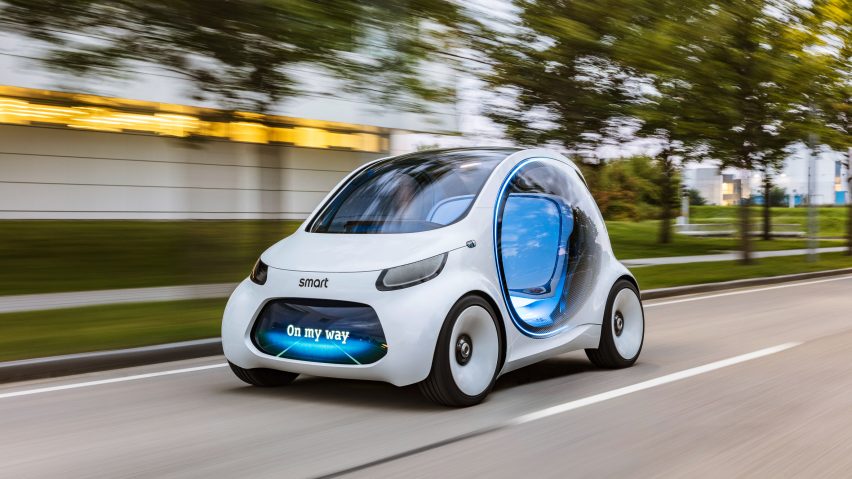
Self-driving Cars For Rural Areas

Background History


As self-driving cars begin to become reality with each coming year, new challenges also begin to emerge. These issues include safety, equity, environmental impacts, and other problems that slow their fast-paced emergence. Among these challenges include rural areas, which are not electronically mapped for self-driving cars.


How It Works


Typical self-driving cars are based of pre-made maps specifically designed for autonomous vehicles. These maps are perfect for highly populated cities where high traffic areas can be tracked to make small changes to each element in the map. Although these may seem perfect, they are far from it as they are very tedious to make and are not cost effective. That's when a group MIT researches decided to set off to conquer the challenge of a descriptive map-less self-driving vehicle. They used numerous sensor to collect data in order to not have to rely on a map.


Impacts/Future Growth


As the area of self-driving cars continues to rapidly grow, expect the area of rural autonomous vehicles to also succeed. The technology can allow drivers to do other tasks with their time instead of driving. 


Pros

  • Can help drivers save time
  • Can help prevent crashes
  • Can be used in other applications (autonomous tractors, airplanes, and drones)

Cons

  • Not yet fully developed
  • Sensors add extra cost to cars
  • Can in some cases be less safer than a human driver

Works Cited
CSAIL, Rachel Gordon |. “Self-Driving Cars for Country Roads.” MIT News, 7 May 2018, news.mit.edu/2018/self-driving-cars-for-country-roads-mit-csail-0507.
Hawkins, Andrew J. “MIT Built a Self-Driving Car That Can Navigate Unmapped Country Roads.” The Verge, The Verge, 13 May 2018, www.theverge.com/2018/5/13/17340494/mit-self-driving-car-unmapped-country-rural-road.
“Self-Driving Cars Explained.” Union of Concerned Scientists, www.ucsusa.org/clean-vehicles/how-self-driving-cars-work#.W7f4ZWhKhPY.

Multimedia


Friday, September 7, 2018

Robotic Surgeons

Background History


The first robot was used in a surgery around 1990. Since then, the field has quickly developed into widespread use among surgery centers and hospitals. The da Vinci Surgical System and Flex Robotic System are the only two robotic surgery operators approved by the FDA. Due to the public's uneasiness and concern over complete robotic surgeries, the FDA has not approved any unassisted robotic surgeons.


How it Works


A human surgeon an "endo wrist" to control the robot's tools. This replicates the movement of a surgeon’s hand and increases the accuracy of movements.  A camera on the robot connects to a high-resolution 3D stereo viewer, which gives the surgeon a much-improved view compared to traditional methods. These systems also allow for single site surgery which leaves only one small incision. This small incision leaves little to no scaring behind.


Impacts/Future Outlook


As the public becomes more comfortable and the technology is developed further, unassisted robotic surgeries are much more likely. The University of Pittsburgh and Carnegie Mellon continue to co-develop robotic surgeons and other universities are following in similar paths. Although the machines are currently only suited for head and neck surgeries, it is likely that more are to follow.

Pros

  • Leaves little to no scaring
  • Often safer than traditional methods

Cons

  • Viewed as uncomfortable for most of the public eye
  • Can malfunction and cause serious injury or death


Works Cited

“How Robotic Surgery Works.” Mills-Peninsula Health Services, 2017, www.mills-peninsula.org/robotic/procedures/.
Shah, Jay, et al. “The History of Robotics in Surgical Specialties.” Advances in Pediatrics., U.S. National Library of Medicine, 1 June 2014, www.ncbi.nlm.nih.gov/pmc/articles/PMC4677089/.
UPMC. “A Quick History of Robotic Surgery.” UPMC HealthBeat, 29 Aug. 2018, share.upmc.com/2016/02/robotic-surgery-history-mm12/.


Multimedia


Monday, May 28, 2018

The World's Biggest Container Ship

Background History

Worldwide shipping has increasingly grown throughout the last decade. The demand for items in weeks, if not days, has now become commonplace. To help fill this demand, Daewoo in South Korea built the MSC Oscar for $140,000,000 in 2015. It continues to hold the record for the largest container ship in the world and operates as a container ship on a daily basis. Mediterranean Shipping Company now owns the ship.


How It Works

The capacity of the MSC Oscar is 14,000 TEU. Since the ship is so large, it is not able to dock in most ports across the world, including all American ports. Mediterranean Shipping Company says that many similar ships are in the construction process, and plans to make ships that can reach up to a staggering 22,000 TEU. They also state that as the ships grow, the efficiency grows as well. This means that the negative environmental impact is decreased, helping to sustain the world we live in.


Impacts/Future Outlook

As the shipping industry continues to grow, boats can be expected to also grow larger. While there are many engineering challenges in building larger boats, it is definitely possible. The size of existing ports also pose problems, but if ports are enlarged than it is possible. 


Pros

  • Can carry more containers
  • Positive environmental impact

Cons

  • Most existing docks can not support boats this large
Works Cited
Dreamer. “20 Biggest Boats In The World.” Ezvid Rank, 14 Mar. 2017, rank.ezvid.com/biggest-boats-in-the-world#1-msc-oscar.
Minter, Adam. “Ships Have Gotten Too Big.” Bloomberg.com, Bloomberg, 14 June 2016, www.bloomberg.com/view/articles/2016-06-14/ships-have-gotten-too-big.

“World's Largest Container Ship Is Too Big for U.S. - CNN Video.” CNN, Cable News Network, 9 Mar. 2015, www.cnn.com/videos/world/2015/03/09/pkg-boulden-uk-massive-ship-msc-oscar.cnn.

Multimedia


Wednesday, May 9, 2018

Electromagnetic Bombs

Background History

Early since the beginning of mankind, wars have broken out between those with disputes and contrasting opinions. To transfer information, simple encoders and decoders were first used to keep the opponent from understanding the message. This was the Enigma in World War II, but has since developed to much more: the electromagnetic bomb.


How It Works

A powerful electromagnetic field is created from very short and intense electromagnetic pulses. Once the bomb is deployed, it wipes out all electrical equipment in the area. This includes generators, refrigerators, computers, and even cell phones. Not only can electromagnetic bombs stop the transfer of information, but can mass chaos across an entire region. While it is believed that the U.S. has E-Bomb capabilities in its arsenal, it is also possible that terrorist groups are building similar weapons.


Impacts/Future Outlook

E-Bomb impact everyone in the world. Even if one does not depend on electricity, the mass chaos will eventually reach them. If an E-Bomb is created by a terrorist group, it can become a massive threat to any country. Unlike nuclear bombs where uranium can be traced to find potential bomb builders, E-Bombs have no special ingredient that can easily be traced. 


Pros

  • Can stop the flow of information of an enemy
  • Can cause mass chaos in an opposing state

Cons

  • Can be used by terrorists for mass harm
Works Cited
Harris, Tom. “How E-Bombs Work.” HowStuffWorks Science, HowStuffWorks, 8 Mar. 2018, science.howstuffworks.com/e-bomb.htm.
Pike, John. “The Electromagnetic Bomb - a Weapon of Electrical Mass Destruction.” Vietnam War - American Return to Dog Fighting, www.globalsecurity.org/military/library/report/1996/apjemp.htm.

Multimedia

Thursday, April 26, 2018

Inductive Charging

Background History

Ever since cell phones were introduced, cords twisting and knotting up have become a persistent problem. Wireless charging capabilities have always been dreamed of, and have finally arrived. While most people think this is a relatively new discovery, it was first discovered by Nikola Tesla in 1901. He created the "Wardenclyffe Tower", also known as the "Tesla Tower", to demonstrate wireless power transfer. Although the experiment failed, his developmental work can still be seen in prototypes today.


How It Works

Electromagnetic waves are created using electrical coils. They ways are then sent through a mat to reach the device being charged. Although initial designs did emit radioactive particles, newer models admit healthy amounts of radioactivity.


Impacts/Future Outlook


As the technology further develops, the health risks and costs can be significantly lowered to be able to enter the consumer market. This means cords of the past could ultimately be worthless someday. Inductive charging could also greatly benefit the automotive industry, with wireless charges placed along or under roads for during use of electric cars.


Pros

  • Less clutter
  • More durable
  • Can charge cars while driving

Cons

  • More expensive
  • Possibly dangerous
  • Slower charging

Works Cited
“How Wireless Induction Chargers Work.” Explain That Stuff, 30 Jan. 2018, www.explainthatstuff.com/inductionchargers.html.
Mearian, Lucas. “Wireless Charging Explained: What Is It and How Does It Work?” Computerworld, Computerworld, 28 Mar. 2018, www.computerworld.com/article/3235176/mobile-wireless/wireless-charging-explained-what-is-it-and-how-does-it-work.html.
Ware, Russell. “What Is Inductive Charging?” Lifewire, www.lifewire.com/what-is-inductive-charging-575296.

Multimedia

Friday, April 13, 2018

World’s Biggest Air Purifier

Background History

Air pollution is killing about 4,400 people in China every single day. The Chinese government has finally admitted that air pollution is a problem in their country, and attempting to fix it. Many engineering and designers are coming up with revolutionary ideas that can not only help China but the rest of the world as well.


How It Works

Polluted air is sucked into the glasshouses and heated up by solar energy. The hot air then rises through the tower and passes through multiple layers of cleaning filters. There is no limit to size so this could be used in a large-scale scenario. 


Impacts On Society

Pros

  • Does not use any non-renewable energy
  • Reduces air pollution

Cons

  • Expensive
  • Has not yet been proven in a large-scale scenario

Future Outlook

Considering that the high demand for air cleaning products in only growing, the future is bright for large-scale air purifiers. Since the market is growing, it likely that more engineers and scientists will work at improving the current designs.


Works Cited

“China Builds 'World's Biggest Air Purifier' (and It Works).” South China Morning Post, 16 Jan. 2018, www.scmp.com/news/china/society/article/2128355/china-builds-worlds-biggest-air-purifier-and-it-seems-be-working.
Markham, Derek. “China Built the Biggest Air Purifier in the World.” TreeHugger, Treehugger, 5 Feb. 2018, www.treehugger.com/clean-technology/china-built-biggest-air-purifier-world.html.
Mosbergen, Dominique. “Air Pollution Causes 4,400 Deaths In China Every Single Day: Study.” The Huffington Post, TheHuffingtonPost.com, 14 Aug. 2015, www.huffingtonpost.com/entry/air-pollution-china-deaths_us_55cd9a62e4b0ab468d9cefa9.
“World's Largest Air Purifier Completes Successful Trial Run in Xi'an, China.” ArchDaily, 16 Jan. 2018, www.archdaily.com/887144/worlds-largest-air-purifier-completes-successful-trial-run-in-xian-china.

Multimedia

Facial Recognition

Background History While facial recognition has been in the consumer market for a few years, it is now be introduced to the governmental ...