DISCLAIMER

DISCLAIMER: The content of this blog reflects neither the opinions or views of the parties involved in its creation and/or distribution.

Friday, March 30, 2018

Bosco Verticale

Background History


Over 3 million deaths every year are linked to the growing problem of air population. Short-term effects of air pollution include irritation of the eyes, nose, throat, and upper respiratory infections such as bronchitis and pneumonia, as well as headaches, nausea, and allergic reactions. Long-term effects include chronic respiratory disease, lung cancer, heart disease, and even damage to the brain, nerves, liver, or kidneys. Seeing the negative impact of air population of his city in Milan, Italian architect Stefano Boeri was determined to find a solution to this problem by building towers surrounded by plants.


How It Works

The 500 medium and large trees, 300 small trees, 5,000 shrubs, and 11,000 other plants combine to convert 44,000 pounds of carbon dioxide to oxygen. The plants also assist in lowering temperature, filtering fine dust particles, and lowering noise pollution. 


Impacts On Society

Pros

  • Reduces air pollution
  • Reduces noise pollution
  • Filters fine dust particles
  • Takes up less than a typical greenspace

Cons

  • Costly
  • Difficult to maintain


Future Outlook

After Stefano Boeri build the first two towers in Milan, he has been summoned across the world for numerous more designs. It is very likely that these designs become popular among other architects as well during a time when pollution is a large concern.


Works Cited
“The Incredible Vertical Forest Residential Towers in Milan, Italy.” TwistedSifter, 4 July 2016, twistedsifter.com/2016/06/vertical-forest-residential-towers-in-milan-by-boeri-studio/.
“What Are the Effects of Air Pollution?” Effects of Air Pollution on Humans, Plants and Animals, 2017, eschooltoday.com/pollution/air-pollution/effects-of-air-pollution.html.
Xie, Jenny. “High-Rise Forests in Italy Are Fighting Air Pollution.” The Verge, The Verge, 9 Aug. 2017, www.theverge.com/2017/8/9/16112758/milan-vertical-forest-stefano-boeri-video.

Multimedia


Friday, March 16, 2018

World's Largest Crane


Background History

After World War II Germany was in a state of disaster. The war had torn apart their country's infrastructure, and years and years of rebuilding was yet to come. Hans Liebherr founded Hans Liebherr Maschinenfabrik (engineering works) in an effort to help rebuilt the country he loved. Making everything from refrigerators to hydraulic excavators Liebherr has a wide variety of products. After finding a hole in the market for high-quality cranes, Liebherr decided to fill the gap. The Liebherr LTM 11200-9.1 is the tallest crane in the world, as well as having the greatest max load capacity.


How It Works


This 9-axle, 8-cylinder monster has the capability to lift 1,200 tons. It also has the longest telescopic boom in the world, which extends fully to 100 meters.

Max. load capacity 1,200 t
at radius 2.50 m
Telescopic boom from 18.30 m
Telescopic boom up to 100.00 m
Lattice jib from 6.5 m
Lattice jib up to 126.0 m
Drive engine/make Liebherr
Drive engine 8-Cylinder-Diesel
Drive engine/power 500 kW
Number of axles 9
Crane engine/make Liebherr
Crane engine 6-Cylinder-Diesel
Crane engine/power 270 kW
Drive/Steering standard 18 x 8 x 18
Driving speed 75.00 km/h
Total ballast 202.00 t


Impacts It Has On Society


Pros

  • Can lift up to 1,200 tons
  • Telescopic boom extends to 100 meters

Cons

  • Costs around $5 million
  • Too big for some confined jobs, like in a city

Multimedia


Works Cited

Abrams, Avi. “The World's Most Powerful Mobile Crane.” Dark Roasted Blend, www.darkroastedblend.com/2011/04/worlds-most-powerful-mobile-crane.html.
Bros, Ritchie. “Blog.” Ritchie Bros. Auctioneers, 7 Jan. 2013, www.rbauction.com/blog/five-of-the-world-s-largest-cranes-.
“LTM 11200-9.1.” LTM 11200-9.1 Mobile Crane - Liebherr, 2018, www.liebherr.com/en/rou/products/mobile-and-crawler-cranes/mobile-cranes/ltm-mobile-cranes/details/ltm1120091.html.

Thursday, March 1, 2018

Three Gorges Dam

Background History


As a nation always hungry for power, China has looked for energy sources for decades. Hydroelectric power has risen in popularity compared to other renewable energy solutions. Many Chineese officals pushed for the creation of a large dam as a power source and a flood controller. Although many engineers criticized the idea as did environmentalists, the dam construction began in 1994. The construction faced many delays but was finally finished in 2012. Since then many foreign officals have publicly criticized the negative impacts of the dam until in 2011 when China publicy admited faults in its $40+ billion project.


How It Works

The dam captures the kinetic energy of falling water and mechanical energy by turning turbines. The energy in the turbines is then transferred into electrical energy. The Three Gorges Dam also has gates that can let water in and out, which is used to control flooding downstream. Although the Three Gorges Dam is set up like a normal dam, its impacts are far from it.


Impacts It Has On Society


Pros

  • Provides 22,500 megawatts of electricity (8 times more than the Hoover Dam)

Cons

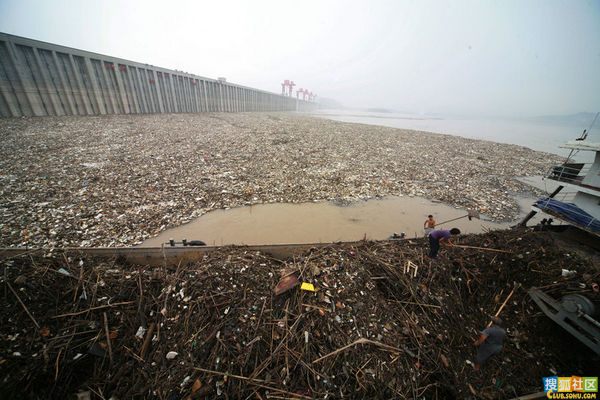
  • Causes earth quakes, landslides, and wide-spread flooding
  • Displaced over 1.4 million people
  • Destroyed countless ancient artifacts and precious landscapes
  • Helps to spread waterborne pathogens
  • Hurts anti-pollution efforts


Works Cited
“How Hydropower Works.” Wisconsin Valley Improvement Company , 2018, www.wvic.com/content/how_hydropower_works.cfm.
Hvistendahl, Mara. “China's Three Gorges Dam: An Environmental Catastrophe?” Scientific American, NATURE AMERICA, INC., 25 Mar. 2008, www.scientificamerican.com/article/chinas-three-gorges-dam-disaster/.
“Three Gorges Dam.” Encyclopedia Britannica, 11 Jan. 2018, www.britannica.com/topic/Three-Gorges-Dam.
Wines, Michael. “China Admits Problems With Three Gorges Dam.” The New York Times, The New York Times, 19 May 2011, www.nytimes.com/2011/05/20/world/asia/20gorges.html.

Multimedia

Friday, February 16, 2018

Nuclear Batteries

Background History


From your car to your cell phone to your calculators, batteries are used constantly in our everyday lives. But eventually these batteries die, and they need replacing or recharging. Well, this can often be a hassle and a pain, and could you imagine a world where the amount of replacing and recharging batteries was drastically reduced. This is where the idea for nuclear batteries was born. Since the 1950s, methods have been known to convert nuclear energy into electrical energy. As the field of nanotechnology rapidly grows, nuclear batteries are becoming more of a reality than just an idea.

How It Works

Similarly to a nuclear power plant, nuclear batteries convert radioactivity to electricity as opposed to storing electricity like in an ordinary battery. Like nuclear power plants, nuclear batteries let off small amounts of radiation which is very dangerous to humans. Even if the nanotechnology is developed, its radiation emission still makes it unusable to the public, but still has other real-world applications.


Impacts It Has On Society

Nuclear batteries can be developed to fuel spacecraft. Once launched into space, these batteries can last over 10 years. Other application would be implantable medical devices (IMDs). This would include small medical electronic devices like hearing aids. To make the technology possible, the radiation admitted would have to be lowered significantly. As of now, the nuclear technology is not advanced enough to make the nuclear batteries a realistic application in everyday life.


Related Engineering Fields

  • Areospace Engineering
  • Electric Engineering
  • Energy Engineering
  • Nanoengineering
  • Nuclear Engineering
  • Power Engineering
  • Power Plant Engineering

Works Cited

Brown, Eric S. “The Atomic Battery.” MIT Technology Review, MIT Technology Review, 21 Oct. 2012, www.technologyreview.com/s/404293/the-atomic-battery/.

Park, Junwon. “Review and Preview of Nuclear Battery Technology.” Review and Preview of Nuclear Battery Technology, 3 Mar. 2017, large.stanford.edu/courses/2017/ph241/park-j1/.

Sebastian Anthony on September 19, 2014 at 11:38 am Comment. “This Nuclear Battery Could Power Your Smartphone Forever - as Long as You Don't Value Your Life or Sperm Count Too Highly.” ExtremeTech, 19 Sept. 2014, www.extremetech.com/extreme/190555-this-nuclear-battery-could-power-your-smartphone-forever-as-long-as-you-dont-value-your-life-or-sperm-count-too-highly.

Multimedia


Thursday, February 1, 2018

Brain-Computer Interfaces

What Are Brain-Computer Interfaces, How Do They Work, and When Were They Discovered/Invented?


Every time our brain functions neurons send small electronic signals as fast as 250 mph across our brains. Brain-computer interfaces are systems that use electrodes connected to the brain to detect these electrical signals to complete a simple task. In the 1960s many experiments were conducted on monkeys which kick-started the idea of brain-computer interfaces. Many scientists believe it is unsafe and inhumane to connect machines to the brains of humans and animals. It is also seen as unsafe because cutting into the brain to insert the machine can be life-threatening.


How Can They Be Used?


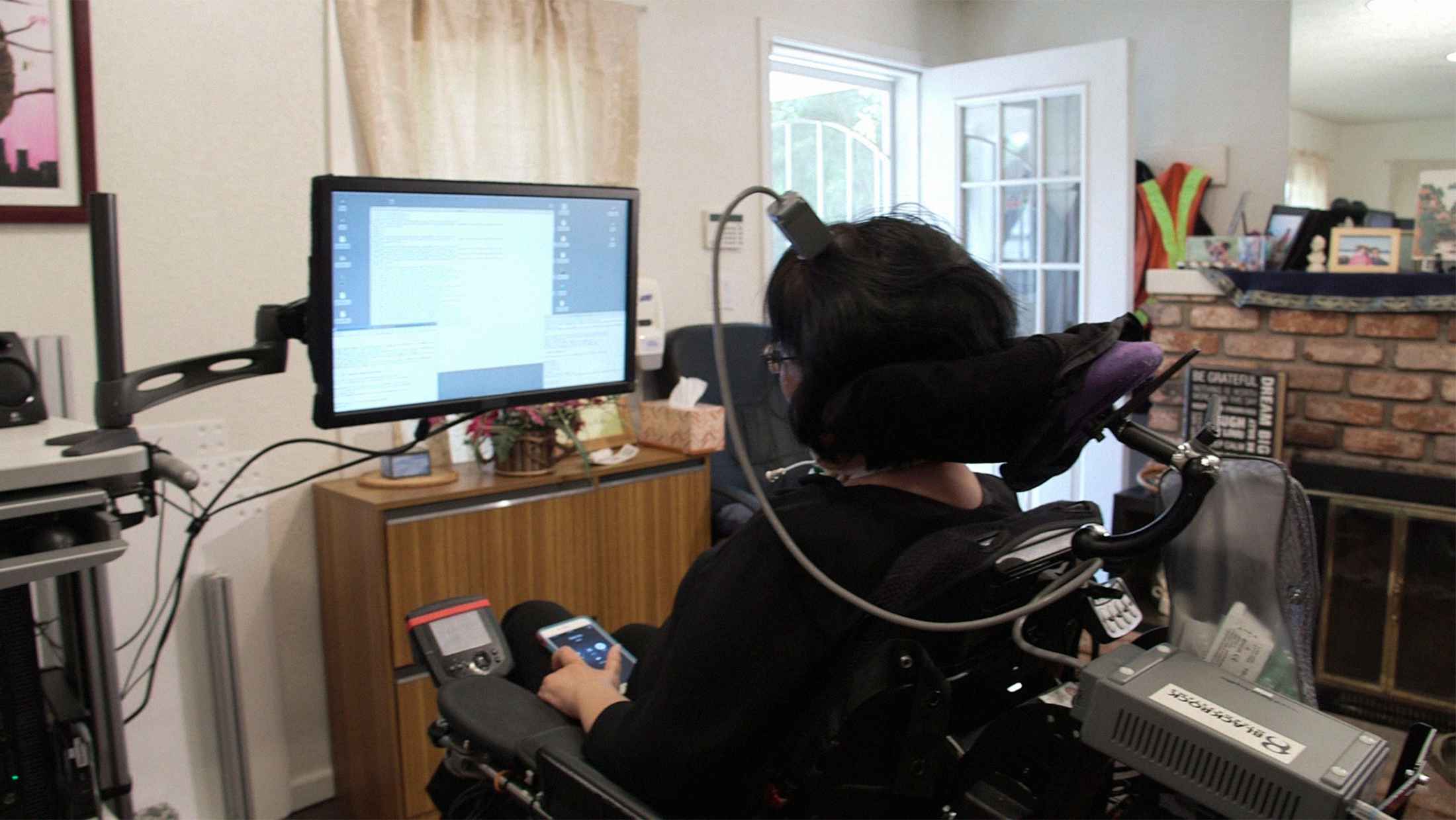
Current technology allows for the minor movement of prosthetic limbs and movement of a cursor on a computer screen. The goal is to give humans the ability to sense, control, and communicate with the world around them. This includes giving hearing to the deaf and giving sight to the blind. Some scientists go as far as saying that brain-computer interfaces could someday help humans connect with the world like never before, like turning off lights with a thought. 


Impacts on Society


Although the pros can seem undoubtedly substantial, in many cases the cons outweigh the pros. 

Pros

  • Can give people abilities they always dreamed of: walking, moving prosthetics, vision
  • Can give people unimagine abilities like turning off lights with a thought

Cons

  • Can damage the brain upon installation
  • Can be reverse-engineered to alter the mind of a person

As the technology of brain-computer interfaces advances, so will its impacts society. Although the technology may seem to be in its beginning stages, it is rapidly advancing and is soon to hit the marketplace. Companies BrainGate and Neuralink are leading the way in the creation and improvement of brain-computer interfaces.


Related Engineering Fields


  • Biological Engineering
  • Biomedical Engineering
  • Biomolecular Engineering
  • Computer Engineering
  • Electronic Engineering


Works Cited
Grabianowski, Ed. “How Brain-Computer Interfaces Work.” HowStuffWorks, HowStuffWorks, 2 Nov. 2007, computer.howstuffworks.com/brain-computer-interface.htm.

Shih, Jerry J., et al. “Brain-Computer Interfaces in Medicine.” Mayo Clinic Proceedings, Mayo Foundation, Mar. 2012, www.ncbi.nlm.nih.gov/pmc/articles/PMC3497935/.

Wise, Jeff. “Brain-Computer Interfaces Are Already Here.” Bloomberg.com, Bloomberg, 7 Sept. 2017,www.bloomberg.com/news/features/2017-09-07/brain-computer-interfaces-are-already-here.

Multimedia

Facial Recognition

Background History While facial recognition has been in the consumer market for a few years, it is now be introduced to the governmental ...